
Shawn Wanta
Founding Partner
Recognized among the nation’s Top 100 Civil Plaintiff and Top 10 Wage and Hour attorneys, a determined litigator fighting for workers in class and collective actions.
Admitted in MN · IL
You reported fraud, illegal conduct, or a violation of the law. Instead of fixing it, your employer came after you. Reporting wrongdoing is protected — and punishing you for it is illegal.
Get free case review
Whistleblower retaliation is when an employer punishes you for reporting a suspected violation of law — fraud, safety violations, securities violations, healthcare billing fraud, or any illegal conduct — to management, a government agency, or law enforcement. It also covers refusing to participate in something illegal. You’re protected whether you were right or simply reported in good faith.
The pattern is almost always the same: an investigation is bad for the company, so the company comes after the person who started it.
You’re fired shortly after reporting fraud or illegal conduct
You’re passed over for a promotion you were in line for
You’re demoted or transferred somewhere you didn’t ask to go
Your hours or job duties change overnight
Your performance reviews turn negative for the first time
You’re frozen out of meetings, projects, and information
You’re bullied or made a target after coming forward
You’re pressured to withdraw or “clarify” what you reported
Federal
Sarbanes-Oxley protects employees of publicly traded companies who report securities fraud. The False Claims Act protects workers who report fraud against the government, including Medicare and Medicaid billing fraud, and can allow them to share in the recovery. Dodd-Frank, OSHA, and numerous industry-specific statutes add further whistleblower protections.
Minnesota
The Minnesota Whistleblower Act protects workers who report a suspected violation of federal or state law in good faith — to their employer, a government body, or law enforcement. It also protects workers who refuse to perform an act they believe is illegal. The law protects your good-faith belief, not your legal accuracy.
Illinois
The Illinois Whistleblower Act protects workers who disclose information about suspected violations of law to a government or law enforcement agency, and workers who refuse to participate in activity that would break the law. Illinois also recognizes retaliatory discharge as a broad common-law claim.
Not sure which law applies to your situation? That’s what we figure out with you.
Fraud against the government — Medicare, Medicaid, defense contracting, grants
Securities violations or accounting fraud
Safety hazards or OSHA violations
Environmental violations
Healthcare billing fraud
Wage and hour violations
Discrimination or harassment
Any suspected violation of federal, state, or local law
You don’t have to be right. You have to have honestly believed something was wrong when you reported it. That’s the whole point — if only correct reports were protected, no one would ever risk making one.
What a whistleblower retaliation case can recover, if your case is successful:
Under the False Claims Act, whistleblowers who report fraud against the government may also be entitled to a share of what the government recovers — sometimes a substantial one.
Every case starts with a free call. We listen first. If you have a case, we tell you what it looks like — what’s likely to happen, how long it might take, what’s realistic. If you don’t have a case, we tell you that too and try to point you toward someone who can help.
On contingency, you pay nothing unless we win.
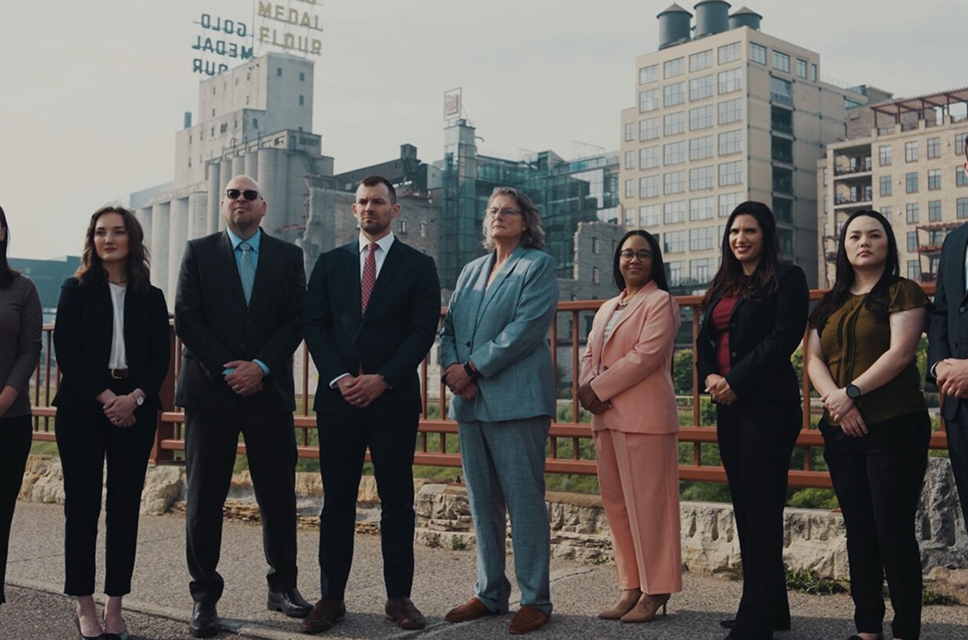
Founding Partner
Recognized among the nation’s Top 100 Civil Plaintiff and Top 10 Wage and Hour attorneys, a determined litigator fighting for workers in class and collective actions.
Admitted in MN · IL
Founding Partner
Drawing on 25 years of representing professionals and managers, a steady advocate for employees facing discrimination, harassment, and retaliation in the workplace.
Admitted in MN

Attorney
Driven by her own encounters with corporate unfairness, a tenacious champion focused on protecting the rights, livelihoods, and futures of hardworking professionals.
Admitted in IN · IL · MI

Attorney
Forged by his background as a Marine, an unwavering defender fighting to level the playing field and secure meaningful financial recovery for unfairly treated workers.
Admitted in IL
You’re generally still protected. The law protects a good-faith report — an honest belief that something was illegal — not a legally correct one. If you reported in good faith and your employer punished you for it, you may have a claim regardless of how the underlying issue turns out.
Usually not. Reporting internally — to your manager, HR, or a compliance line — counts as protected activity under most whistleblower laws, including the Minnesota Whistleblower Act. You don’t have to go outside the company first.
Yes. Both Minnesota and Illinois specifically protect workers who refuse to perform an act they reasonably believe is illegal. You don’t have to report anything — declining to participate is itself protected conduct.
You may still have a claim. If your employer figured out it was you and retaliated, the anonymity of the original report doesn’t erase your protection. What matters is whether they punished you for the protected activity.
Possibly. Under the False Claims Act, whistleblowers who successfully report fraud against the government can receive a portion of the recovery. These cases have specific procedures and deadlines, and the details matter a great deal.
Five fields, no story needed yet — that comes on the follow-up call. Most people hear back within five minutes if Nina is enabled, or the same business day if not.
Your submission is confidential. We do not contact your employer.
It depends entirely on which law protects you — Sarbanes-Oxley, the False Claims Act, the Minnesota Whistleblower Act, and OSHA all have different deadlines, some as short as six months. Because they vary so widely, call early rather than assuming you have time.
Not from us. An initial conversation is confidential, and we don’t contact your employer. If you decide to move forward, we walk you through exactly what happens and when, before anything is filed.
Your report itself — email, form, complaint, anything documenting that you raised it. Then everything that came after: reviews, discipline, schedule changes, communications. The before-and-after contrast is often the heart of the case.
No. Reporting suspected illegal conduct to a government or law enforcement agency is protected under both federal and state whistleblower laws. Firing you for it is retaliation, and it’s a separate violation on top of whatever you reported.
For most cases, nothing upfront. We work on contingency — you pay no fees unless we recover money for you. The first call to find out whether you have a case is always free.